Opening a Restaurant: The Checklist Before Day One
Most new restaurants struggle for reasons that were visible months before opening night. This checklist walks through the numbers, the location, the menu, the team and the digital setup – in the order you need them.
Opening a restaurant is a hundred decisions made under time pressure, and most of the expensive mistakes are made long before the first guest sits down. This checklist puts those decisions in the order you will meet them – from the first spreadsheet to the first 90 days of service – so nothing important is left for the week before opening.
1. Concept and numbers before anything else
Write your concept in two sentences: who you cook for, what they order and what they pay. Then turn it into a simple revenue model:
seats × guests per seat per day × average bill × days open = monthly revenue
Do the same for costs: rent, salaries, ingredients, utilities, marketing, repayments. Run the model three times – a good month, a normal month and a bad one. If the bad month sinks you, change the concept, the location or the budget now, not after opening. Keep a cash reserve for several months of fixed costs; the first months are rarely full.
2. Location: traffic at your hours
A busy street at noon can be empty at 8 p.m. Visit the location at the hours you plan to be open, on weekdays and weekends, and count who walks past. Check what the building allows before you sign: ventilation and extraction for a kitchen, gas and electricity capacity, water and drainage, space for storage and deliveries. The cheapest rent is no bargain if the kitchen cannot be built there.
3. Paperwork and permits
The exact rules depend on your country and city, so ask the local authorities early and keep a list. Typically you will need business registration, food-safety approval for the premises, fire-safety checks, staff health requirements and – if you serve alcohol – a separate licence. These steps often take longer than the renovation, so start them first.
4. Kitchen, equipment and suppliers
Your menu decides your kitchen, not the other way round. List every dish, the steps it needs and the equipment those steps use – that is your equipment list. For each key ingredient, find two suppliers, so one late delivery never closes a dish. Run full test cooks for the whole menu before you print or publish anything.
5. A short, costed opening menu
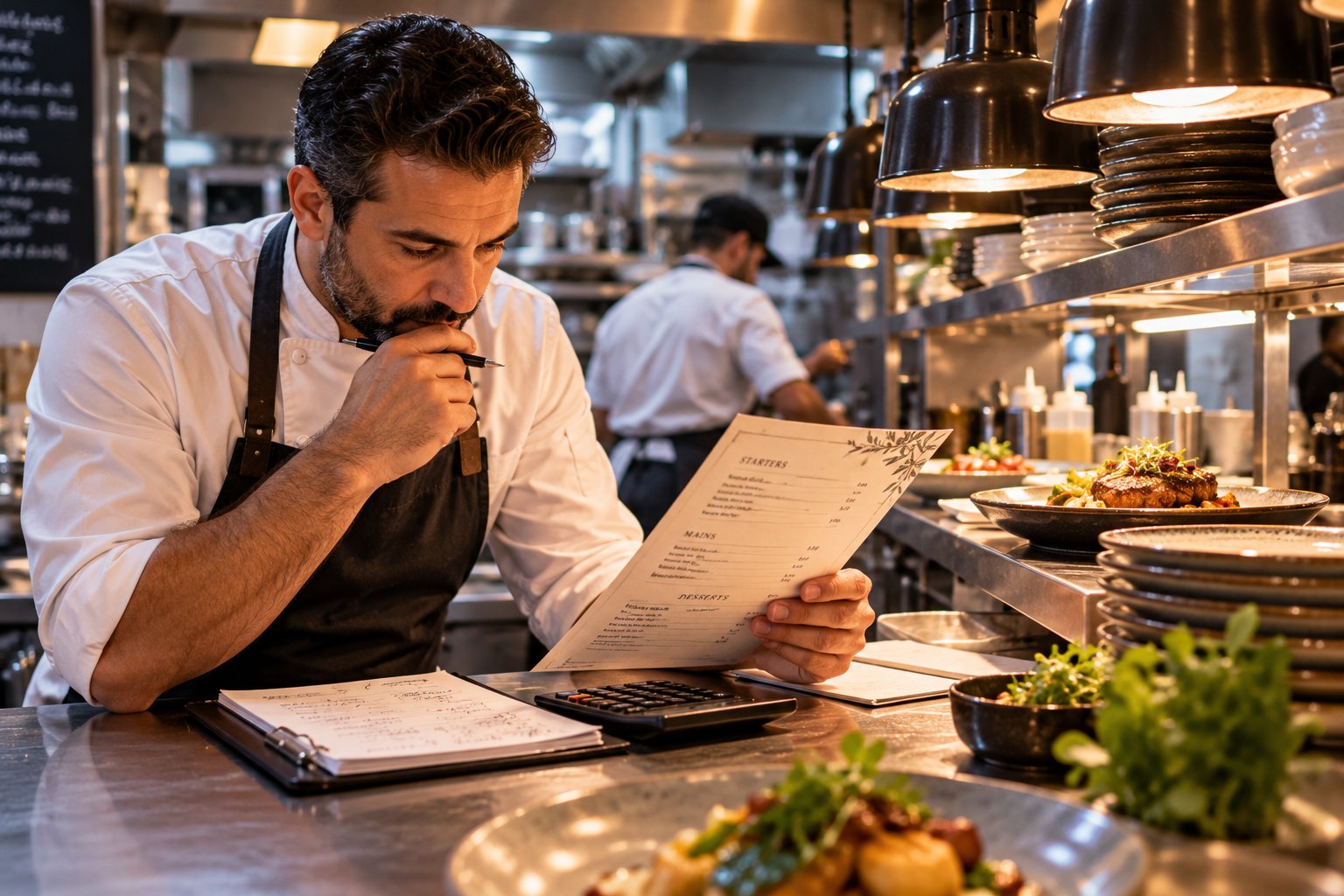
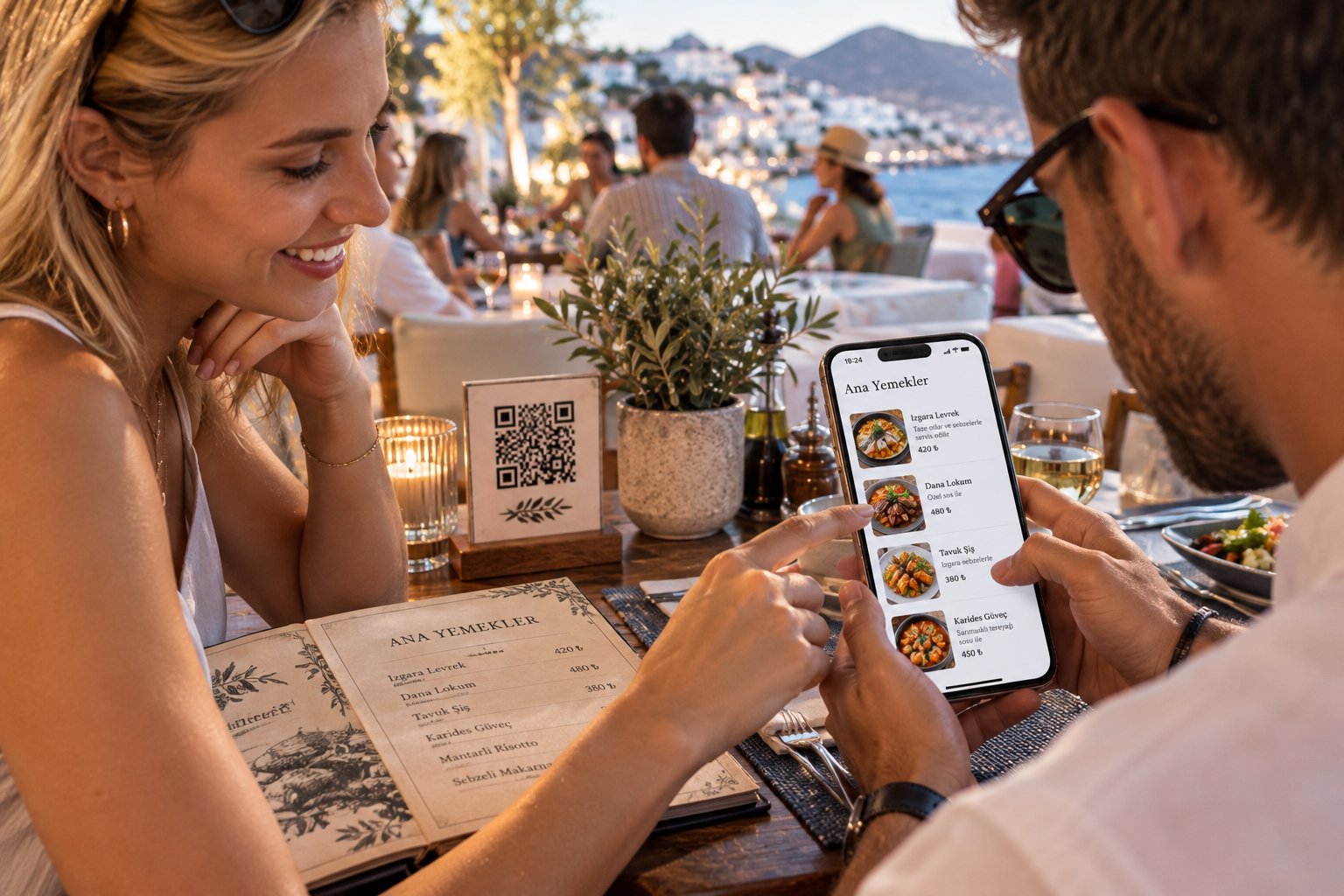
Open with fewer dishes than you think: a short menu is faster in the kitchen, wastes less and is easier for a new team. Cost every recipe down to the garnish and know the profit of each plate – our guide to menu engineering and pricing shows how. If tourists or expats live nearby, plan the languages of your menu from day one rather than adding them later.
6. Hire early, train with real food
Hire the core team weeks before opening, not days. Train with the real menu: everyone tastes every dish, learns the allergens and can describe each plate in one sentence. Walk through the full service – greeting, ordering, paying, cleaning – until it runs without you.
7. Digital setup before the doors open
Guests will look you up before they visit. Before opening day:
- create your business profile on the maps and search services your guests use, with hours, photos and a link to your menu;
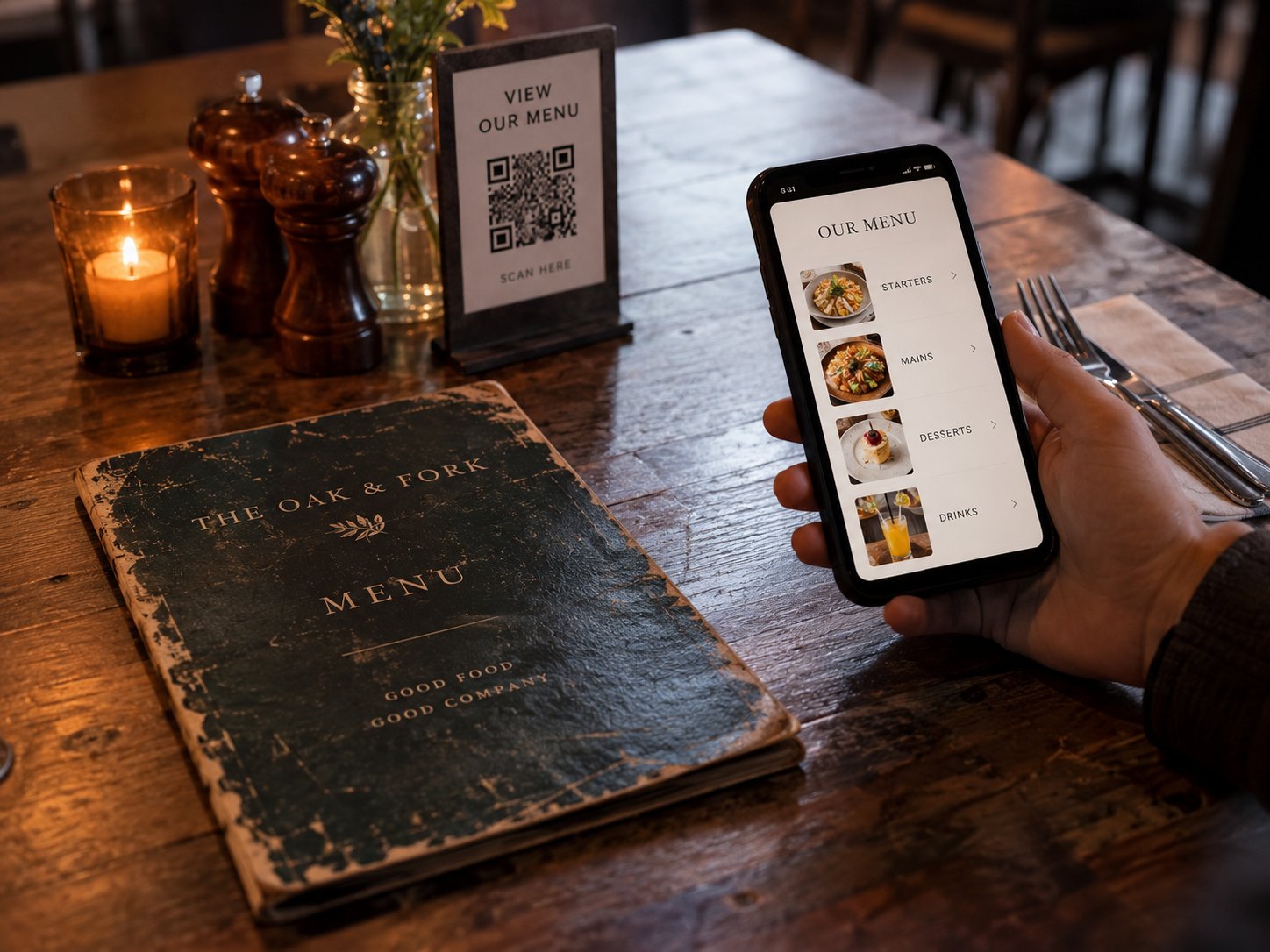
- put a digital menu online and the QR codes on the tables – read our checklist for choosing a QR menu system and what it costs;
- decide how guests will book a table and test it yourself;
- set up your payment terminal and test card payments.
8. Soft opening
Run a few evenings for friends, family and neighbours with a limited menu. Treat them as rehearsals: time the kitchen, watch where guests hesitate, ask for honest feedback with a short survey, and fix the problems before the public opening.
9. The first 90 days
Track a few numbers every day: number of guests, average bill, best- and worst-selling dishes and food cost. Change one thing at a time and give it a week. Restaurants rarely fail in one night; they fail when nobody looks at the numbers until the money is gone.
The short version
- Concept in two sentences and a revenue model with a bad-month scenario.
- Location checked at your opening hours and for kitchen requirements.
- Permits started first.
- Equipment list from the menu, two suppliers per key ingredient.
- Short, fully costed opening menu.
- Team hired and trained on the real food.
- Online profile, digital menu, bookings and payments ready.
- Soft opening, then daily numbers for 90 days.
Where YR Menu helps
With YR Menu you can have a multilingual digital menu with QR codes ready in an afternoon – and change it in seconds during those first busy weeks. Add table reservations, a short guest survey after the meal and menu analytics that show which dishes guests look at most. See all features or start free for 14 days, no card needed.